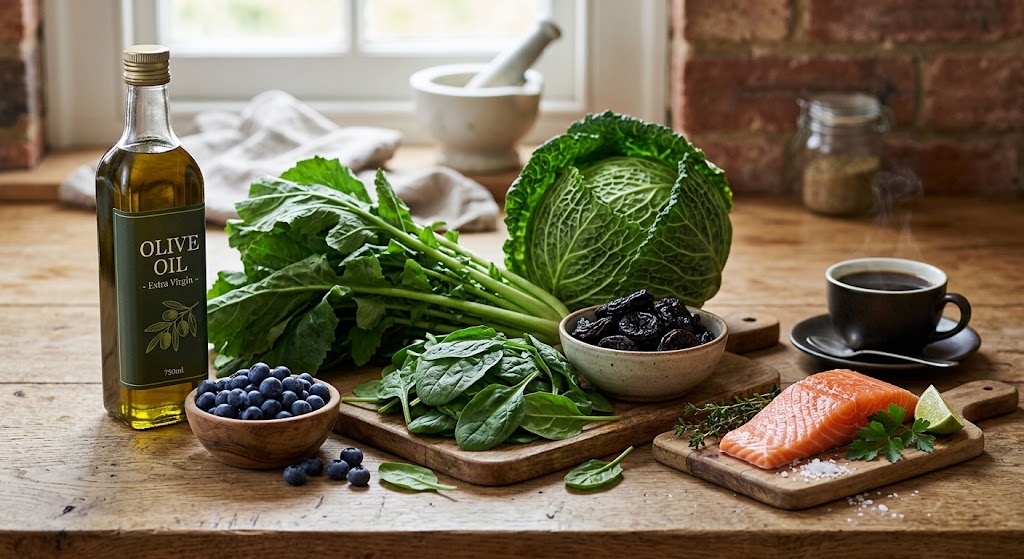
Last week, I shared with you foods that improve your memory. This week, I will share more. The more options you have, the better.
Leading the pack is the powerful blueberry; its color comes from anthocyanin, one of its most powerful antioxidants. The antioxidants in blueberries keep your brain safe from free radicals. Free radicals cause disease. The antioxidants in blueberries slow and sometimes reverse memory loss. Another health benefit of blueberries is that they help lower blood sugar.
Olive oil is full of omega-3 fatty acids, which not only improve brain function but also protect against other health issues. An Italian study of 300 seniors who ate at least 5 tablespoons of olive oil a day found that it improved memory and problem-solving skills.
I grow turnip greens in my garden every year. Getting enough vitamin E is vital to staying mentally alert. Turnip greens and spinach are full of vitamin E, a potent antioxidant. Vitamin E helps fight free radicals and may help prevent cancer, heart disease, and memory loss. A 10-year study in Chicago followed people 65 years and older. Eating foods rich in vitamin E was found to be more effective against Alzheimers.
Memory loss isn’t always due to old age. An underactive thyroid could be the culprit. Nutrients like vitamins A, E, and D will keep your thyroid healthy. Eating spinach regularly will keep your thyroid healthy. The best way to cook spinach to preserve the vitamins is to steam it. This prevents the nutrients from going into the water. Use fresh spinach in a salad or on a sandwich.
Research shows prunes can slow the signs of aging, including Alzheimer’s and Parkinson’s disease. Researchers at Tufts University in Boston have measured and studied antioxidants in foods. They assigned each food a score called the Oxygen Radical Absorbance Capacity (ORAC). Prunes registered 5,770 ORACs per 3 1/2 ounces serving. Twice as many antioxidants as the next highest food, its cousin, the raisin.
A six-year study done in an older biracial Chicago community found that people who ate one or more servings of fish per week reduced their mental decline by 10 to 13 percent per year. That’s like being three to four years younger. Omega-3s may protect against Alzheimer’s disease.
A fatty acid, phosphatidylserine (PS), found in cabbage, may boost your brain. It’s a fatty acid involved in communication between cells. As we age, the nerve cell membranes become less fluid and have difficulty transmitting electrical impulses. This may contribute to memory and reasoning loss in older adults. PS helps membranes stay fluid. Aside from memory and concentration, PS also relieves depression and stress. Cabbage can be stuffed with meat and rice, chopped in a soup, slaw, or a side dish.
The first thing I do most mornings is turn on my coffee pot. A cup of coffee with a dash of cream does it for me. We all know the caffeine in the coffee boosts your energy level. Caffeine also stimulates the areas of the brain involved with attention and short-term memory. Don’t overdo it. Too much caffeine can result in other problems.
Add the above foods and those mentioned in the Memory blog to your diet. Mark your start date on your calendar. See where you are in three months.
Ginkgo bilboa, has been pushed as the top-selling herb for memory loss. The jury hasn’t come in on whether it can prevent memory loss. Please do not take it with aspirin, heparin, warfarin, or other blood thinners. If you are taking any medication, talk with your doctor before using it.
Considering the recall of some vegetables, I suggest purchasing fruits and vegetables from a local farm. Most communities have flea markets where farmers sell their produce. Be safe, stay healthy.
Until the next time,
Peace, Love, and Blessings ❤️


Leave a Reply