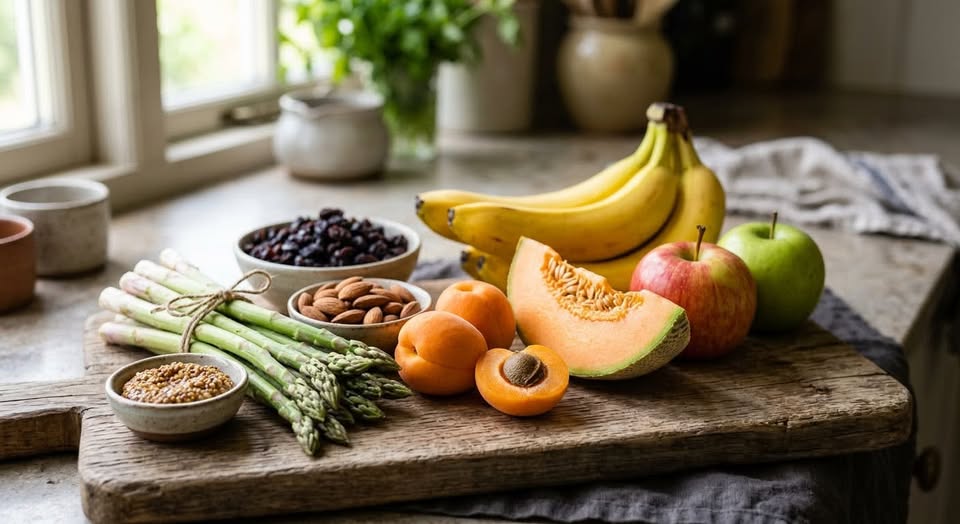
Many of us think that memory loss is natural as we age. Truth be told, your brain is capable of accomplishing great things. Even as we enter our golden years. Exercising your brain is as important as exercising your body. I make it a point to learn something new every day. The internet has made that very easy. Every day, I do an activity like reading, playing a game on my phone or computer, or doing puzzles, including the ones you manually put together.
Those of you who have been following me know I always say that what you eat affects your body.
Asparagus, one of my favorites, supports your memory because of the B vitamins, folate, thiamine, B6, and B12 it contains. According to experts, low levels of B vitamins may result in poor memory and possible Alzheimer’s disease. Add asparagus to your diet to help strengthen your memory.
Who likes mustard on their hot dogs and/or burgers? That would be me; I like to slather mustard on my dogs and burgers. Mustard contains the spice turmeric, responsible for its bright color. Turmeric contains phenolic compounds called curcuminoids. Animal and cellular studies found these compounds may prevent or improve Alzheimer’s disease symptoms.
Almonds are full of omega-3 fatty acids, a form of unsaturated fat (healthy fat), that help to improve memory and defend against Alzheimer’s. Almonds contain a second memory booster, vitamin E. Eating a handful of almonds while reading a book doubles your dose of brain tonic.
The beautiful color of apricots comes from the antioxidant beta-carotene. Alzheimers has been linked to free radical damage. The beta-carotene in apricots protects the brain by fighting the free-radical intruders and repairing any harm they caused.
Cantaloupe to the forefront! It not only contains vitamin C but also beta-carotene. Low levels of vitamin C can cause memory loss and affect mental capabilities. One cup of cantaloupe has about 52 milligrams of vitamin C. That is more than two-thirds of the amount recommended for women over 50. Add cantaloupe to your breakfast.
Apples, which were packed in my lunch bag every day, have a very potent antioxidant. Quercetin protects the brain from free radicals. A study done at Cornell University found that brain cells treated with Quercetin and exposed to cell-damaging hydrogen peroxide had significantly less damage than cells treated with vitamin C or none at all. You know that old saying we grew up with: “An apple a day keeps the doctor away”
A quick and easy way to add B6 to your diet is to eat a banana. Not having enough B6 makes it harder to make neurotransmitters, the chemicals that carry nerve impulses from your cells to your brain. That shortage can lead to depression, a short attention span, and other problems. Studies have shown that B vitamin deficiencies may cause serious conditions like Alzheimers.
Want to stop a mental breakdown? Try raisins, which are packed with boron. Boron, a trace mineral, is not considered essential by the government. However, it affects everything from hand-eye coordination to long- and short-term memory. Studies have shown that boron deficiency decreases electrical activity in your brain, affecting your thinking and motor skills. Try this snack to increase boron intake: raisins with peanut butter and sliced bananas on a graham cracker. The top five boron foods per 3.5 ounces are:
- Raisins 2,200
- Peanuts 1700
- Peanut butter 1450
- Wine 610
- Peaches 530
Adding these foods to your diet can help keep your mind sharp and your memory intact. Use it or lose it!
Next week’s post will be part two on Brain-Booster foods; be sure not to miss it!
Until the next time,
Peace, Love, and Blessings ❤️


Leave a Reply