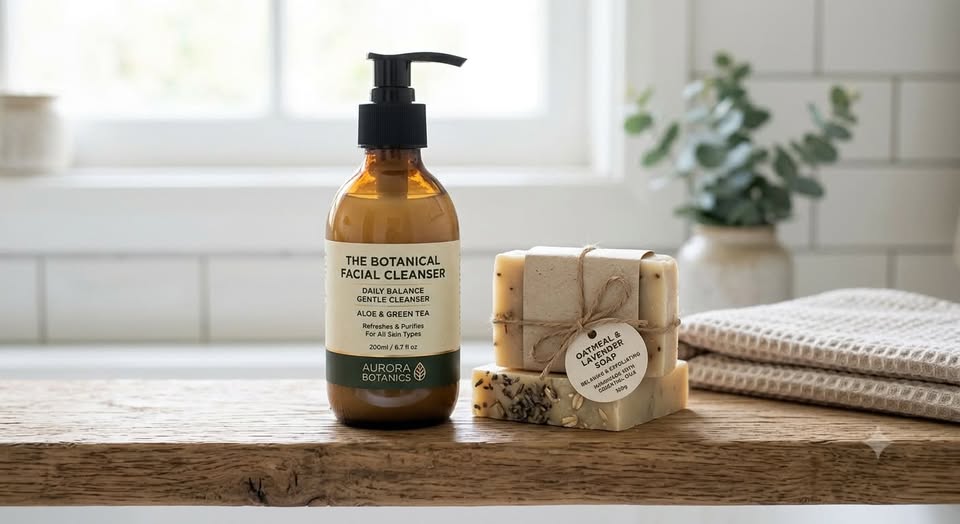
We all use soap and facial cleansers daily, as we should. Daily cleansing is necessary to remove dirt and pollutants that clog pores, speed up aging, and can cause disease.
But many cleansing products are not skin- or health-friendly. Most soaps and facial cleansers can cause harm.
Our skin is the largest organ of our body. It is made of the epidermis, dermis, and hypodermis. All the layers work together to protect the deeper layers of skin, revive the top layer, keep skin elastic and firm, keep away pathogens, and protect internal organs.
When dead skin cells flake off, the top layer (epidermis) is replaced by new ones. The dermis, the middle layer, contains sebaceous glands that produce oil that moisturizes and softens the skin.
Regularly cleansing our skin helps remove dead skin cells. This keeps your skin looking bright and healthy. Soap also cleans dirt and debris that clog pores and helps get rid of excess oil. It’s important that you use the right soaps and cleansers to keep you looking healthy.
However, there are flaws in most soaps and facial cleansers we use, even the expensive ones. Most soaps and facial cleansers contain chemicals known as surfactants. Surfactants dissolve oil and dirt so water can wash them away.
The problem is surfactants can also wash away natural sebum and undermine your skin barrier, allowing impurities and bacteria to penetrate deeply. Using a natural ingredient such as aloe vera cleanses pores without stripping your skin.
The other issue with using traditional soaps is that they have a highly alkaline pH. This is because they are made by combining a fat or oil with an alkaline like lye. Lye allows the soap to grab onto dirt and oil.
But our skin has what is called an acid mantle. It is a protective layer made of amino acids, fatty acids, and oils. Because of the acid mantle, the pH of skin falls in a range of 5.4-5.9, which is on the acidic side. This range is important for keeping beneficial bacteria on your skin thriving. Any damage to the acid mantle can open the way for pathogenic bacteria and cause skin dehydration and irritation.
Most common soaps on the market have a pH between 9 and 10. Some go as high as 11. This makes them very alkaline. The thin areas of your body, like your face, armpits, and private parts, absorb what is applied to them the most because they are most permeable.
Your skin absorbs much of what is applied to it and can get into your bloodstream. In the U.S., only eleven chemicals are banned from cosmetic and personal care products. Compared to 1400 chemicals banned from soaps and cleansers in the EU and other countries.
Check the labels of soaps and cleansers for the seven most common chemicals found in them.
#1 Parabens, a common preservative used to prevent bacterial growth in personal care products. They are easily absorbed into your skin and are associated with negative effects. Parabens can mimic hormones within the human body. This makes them endocrine disruptors that affect the hormonal health of men and women. Look out for different forms of parabens like butylparaben, propylparaben, and methylparaben.
#2 Sulfates, which are used as surfactants in soaps to increase foam and lather. The two most common are Sodium Lauryl Sulfate (SLS) and Sodium Laureth Sulfate (SLES). Sulfates can strip your skin of healthy oils. Long-term use can lead to skin irritation and sensitivity. They also have a negative impact on the environment, affecting wildlife.
#3 Fragrance should send a warning signal. Companies are allowed to keep their fragrance a secret. There may be a large number of undisclosed chemicals in a cleanser. Fragrance additives likely cause allergic reactions, skin sensitivity, and irritation. Several fragrance compounds, including phthalates, are potential carcinogens and hormone disruptors. Look for a scented product that has natural plant extracts or essential oils.
#4 Formaldehyde-Releasing Preservatives, which can cause dangerous side effects even at low exposure. It is classified as a carcinogen by the International Agency for Research on Cancer. It has also been found to cause respiratory problems, skin irritation, and dermatitis. Formaldehyde is not directly added to soaps or cleansers. However, several preservatives are known to release formaldehyde. These chemicals are absorbed by the skin and are even found in baby soaps! A few countries have banned these preservatives, and others have restrictions in place, but not the U.S.
#5 Cocamidopropyl Betaine is a synthetic chemical and a surfactant. It increases foaming action and is found in hand soap and other cleansers. This chemical was named allergen of the year in 2004 by the American Contact Dermatitis Society because of the frequency with which it was causing skin irritation. Look for these names as well: Cocamidopropyl dimethyl glycine, Cocoamphocarboxypropionate, CADG, and Disodium cocoamphodipropionate.
#6 1,4-Dioxane: You won’t see this chemical listed on a product; it’s a byproduct created when sodium laureth sulfate or other chemicals are combined during manufacturing. The EPA lists 1,4 Dioxane as a likely carcinogen frequently present in cosmetics. It can cause skin irritation, respiratory problems, kidney and liver damage. The best way to avoid it is to avoid other synthetic chemicals. Look for USDA Certified Organic soaps and cleansers.
#7 Antibacterial Chemicals like Triclosan have been linked to cancer, allergies, hormonal disruption, and more. It has now been banned from soap but is still allowed in other personal care products such as anti-aging creams. Make it make sense. When it comes to soap and facial cleansers, the problem is that other antibacterial chemicals escaped this ban and can still be added. They include benzalkonium chloride, benzethonium chloride, and chloroxylenol (PCMX). Overuse of antibacterial soap has contributed to antibiotic resistance. They also have their own side effects. It’s very important to avoid antibacterial chemicals.
So after reading about the toxicity in soaps and facial cleansers, you probably want to look for an “all-natural” or “organic” brand. Not so fast; there are a few rules that guide what companies can and can’t claim on their labels. For example, the FDA has no definition of the term “natural” as it applies to cosmetic products. It’s up to the manufacturer’s discretion. They can use one organic ingredient and have “organic printed in large letters on the product.
It is best to look for “USDA Certified Organic on the label. Stay safe, check labels.
Until the next time
Peace, Love, and Blessings❤️


Leave a Reply