I live alone and practice healthy eating. Now, let me be clear: I do have to indulge in some Handel’s Ice Cream twice a month, or some delicious chocolate, sometimes both. I prefer buying fresh vegetables rather than canned ones, but inevitably, I end up freezing them before they go bad.
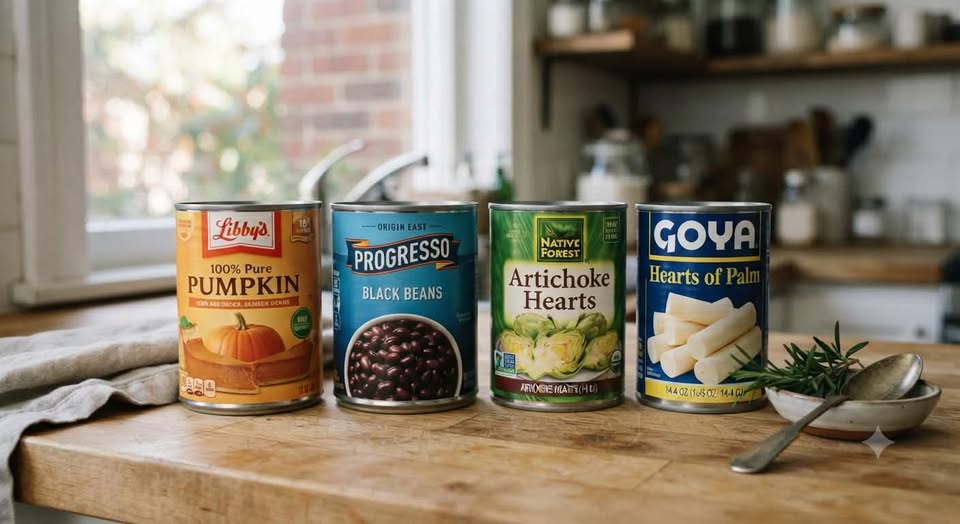
Canned vegetables have a long shelf life, are nutritious, convenient, and affordable. In some cases, canned vegetables are better than fresh vegetables. I will share four with you today.
Let’s start with pumpkin, a type of squash that takes a long time to cook in its raw form. If you want to make pumpkin pie, puree, or sauce, canned pumpkin is the way to go. There are 3.5 gms of fiber in 1/2 cup of canned pumpkin. The majority of that fiber is water-soluble. It forms a gel in your digestive tract, making it easier to pass stool and helping lower cholesterol. Another positive of canned pumpkin is that it has high potassium. Potassium is important for hydration and for lowering blood pressure. Read the label; you want 100% canned pumpkin with no added salt or sugar.
Canned beans require no soaking before cooking. Pop the can open, and you are ready to prepare your favorite bean dish. Canned beans contain 7 to 9 grams of plant-based protein and 5 to 8 grams of fiber per 1/2 cup of drained beans. They also have folate, potassium, sulfate, iron, zinc, and antioxidants.
Canned beans do contain more sodium than fresh. You can choose low-sodium beans or simply rinse them well with water. Rinsing the beans well can remove up to 41% of the sodium content.
You may not be familiar with artichokes, but cooking them fresh is challenging. It’s much easier to zip the can open. Artichoke hearts can be used in salads, pasta, or pizza toppings. Artichokes are rich in gut-friendly fiber, including inulin, a prebiotic. Prebiotics are good for your gut health. 1/2 can of artichokes provides 4 grams of fiber.
Artichokes are also rich in antioxidants, plant-based compounds that fight inflammation by killing free radicals. Free radicals can damage cells in your body and cause diseases.
Try something new, hearts of palm add a twist to your regular vegetable routine. Add them to salads, dips, eat them alone, or use them as a substitute for seafood. Finding fresh ones is challenging because they have a short shelf life. A one-cup serving provides 3.5 grams of fiber. Additionally, they provide prebiotics for better gut health.
Try adding canned vegetables to omelets, salads, or to make a soup. Remember, eating healthy is more than getting rid of some foods. It’s about adding something new and nutritious that has a positive impact on your health.
Until next time,
Peace, Love, Blessings ❤️


Leave a Reply